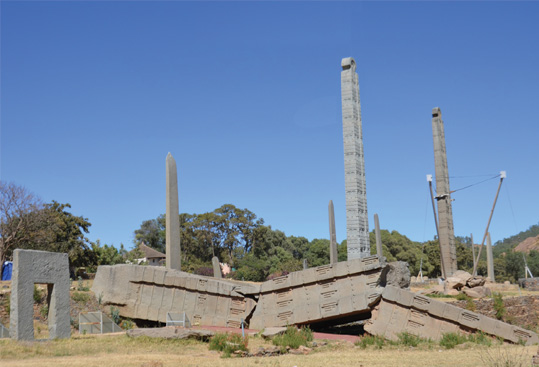
Welcome to Ethiopia, Land of Origins
Ethiopia invites you to discover why it is the origin of so much! As you explore Ethiopia, you will be put in touch with your own origins…for this is a Land of Origins
Ethiopia is a land of full of contrast, a land of remote and wild locations, and a land that is home to culturally rich and friendly people. A people who are believed to have descended from some of the World’s oldest civilizations. This very land is the home of the fabled Queens of Sheba. The birth place of coffee and is believed to be the home the Biblical Ark of the Covenant. A Trip to Ethiopia is profoundly historical. A homecoming for all peoples of the world. This is because it is in the Ethiopia rift valley. A volcanic scar that bisects this great land, where hominids first walked on two feet.
Enjoy the hospitality of the Ethiopian people on your tour
Ethiopia has a highly diverse population of people. Most people speak a Semitic or Cushitic language. The Tigray, Oromo, Somali and Amhara people make up more than three-quarters of Ethiopia’s human population but there are more than 80 different ethnic groups represented. Some of these ethnicities have as few as 10,000 people. English is the most widely spoken foreign language and is taught in all secondary schools. Amharic was the predominant Ethiopian language of primary school instruction but has been replaced in many areas by local languages such as Tigrinya and Afar.
Ethiopian Holiday
Meskel September 26-27 the finding of the true cross (Addis Ababa, Aksum, Adigrat and Mekelle) many religious leaders and choirs from various churches in the city will gather. In the evening, the tall “Damera” bonfire is lit to commemorate the discovery of the cross up on which Jesus was crucified.
Hidar Tsion is the holiday of St Marry of Tsion, celebrated (November 29/30) commemorates the entry of the Ark into Abyssinian highlands. And the coronation day of the first Christian Kings Ezana and Sazana. The holiday of St Maryam of Tsion is accompanied with great and honorable singings and traditional dancing. Thousands of Pilgrims travel to Aksum from all over the country.
Timket January 19th (Aksum, Addis Ababa ) Ethiopia’s most celebrated festival. Commemorates the baptism of Jesus Christ in the water of river Jordan, the Ark of the Covenant is removed from its chapel with many people attending it. The following morning the church officials assemble around the Tabot and sprinkle holy water over all faithful present and receive the renewals of their vow.
Hosa’na (Palm Sunday) in Aksum celebrated one week before Easter and commemorates the triumphal entry of Jesus Christ and his disciples into Jerusalem. During the procession, people lay branches of palm and green grass on the street and accompany the procession, the priests are followed by a donkey and foal wearing decorated linen cloths. This symbolizes the entry of Jesus Christ into Jerusalem riding a donkey.
Fasika Ethiopian Easter dates changes every Year. A fascinating all night prayer vigil is available at all orthodox churches. Addis Ababa Holy Trinity, Aksum, and Lallibela churches are particularly special.
Ashenda and Aynewari (August 16-26): Witness Tigrai’s girls blossom in this vibrant celebration. Young women adorned with “Ashenda” – tall green grass – dance through streets, their songs echoing through the air. Be captivated by their joyous energy and witness a tradition that sparks cultural understanding.
Explore Ethiopian Myths & Legends
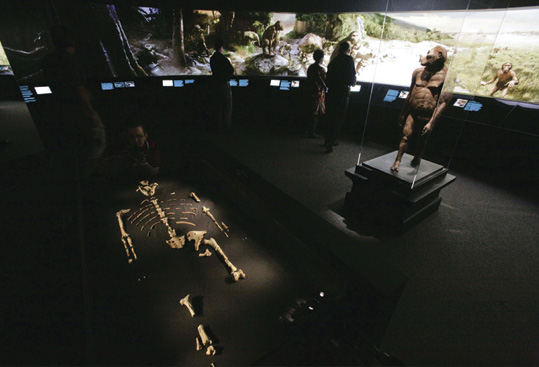
Go even further back to before the beginning of our species Homo sapiens. This region of east Africa near the former land bridge across the Red Sea to Arabia is widely considered to be where early humans started to move out of Africa and migrate into Europe and Asia. This is where we began.
Discover the diversity of bird and wildlife along the fringe of the Awash river in the Afar/ Danakil desert and in the mountains of the Simien massif.
Look around the bustling modern city of Addis Ababa which doubles as the diplomatic capital of Africa.
History of Ethiopia
The recorded history of Ethiopia dates back more than 3,000 years to the pre-Aksumite Empire of D’mt, whose capital Yeha lay at the heart of a well organised trade empire that stretched across the Red Sea to Yemen. According to legend, the nearby city of Aksum (which is still inhabited today) was once ruled over by the Queen of Sheba, who famously visited King Solomon of Jerusalem during her reign, and bore him a son who was crowned as Emperor Menelik I. Ethiopians believe it was Menelik I who brought the Ark of the Covenant to Ethiopia, and who founded the Solomonic Dynasty, which endured until the late 20th century reign of Emperor Haile Selassie I.
Aksum later served as the capital of the Aksumite Kingdom or Empire, which probably emerged as the dominant trading power in the Horn of Africa in the 4th century BC and retained that role for another 1,000 years under a succession of powerful rulers. Aksum was a major player in commerce between the Roman Empire and India, and its rulers facilitated trade by minting their own currency. Among the great Aksumite rulers was King Basen, or Balthazar, who according to some legends was one of the Three Wise Men who visited the baby Jesus bearing gifts of gold, frankincense and myrrh.
In the 3rd Century AD, the Persian writer Manni listed Aksum along with Persia, China and Rome as one of the world’s four greatest kingdoms. In 341 AD, King Ezana founded the Ethiopian Orthodox Church, making Aksum the first major empire to convert to Christianity. In the 7th century, a group of Muslims who had originally converged in Mecca sought refuge from Quraysh persecution by travelling to Aksum, which is known in Islamic history as the First Hijra. Negash, founded at this time, is reputedly the oldest Islamic settlement in Africa.
Ethiopia took its modern shape in the late 19th century under a series of powerful emperors: Tewodros I (ruled 1855-69), Yohannis IV (1872-89) and Menelik II (1889-1913). Following the late 19th century ‘Scramble for Africa’, Ethiopia remained the only African country not to be colonised, largely as a result of the imperial army’s victory over the Italians at the Battle of Adwa on 1 March 1896. Menelik II was the founder of the modern capital Addis Ababa, whose growth was bolstered by the arrival of the Djibouti railway in 1917 and an associated influx of Armenian and French traders, as well as by the drive for modernisation under Emperor Haile Selassie I following his coronation in 1930. In 1963, Addis Ababa was chosen as headquarters of the Organization of African Unity (now the African Union), a role it has retained ever since.
Ethiopia today occupies a territory of 1,104,300 square kilometres, making it the tenth-largest country in Africa. Its population is estimated at between 95 and 100 million, the second largest in Africa (after Nigeria). Following the installation of a transitional coalition government in 1991, Ethiopia adopted a new federal constitution in December 1994. Composed of nine Regional States and two City Administrations, Ethiopia is now a multiparty democracy that has held democratic elections every five years since May 1995.
Explore Ethiopia’s unique UNESCO World Heritage Sites
Ethiopia has nine UNESCO World Heritage Sites and we can take you to all of them. No African country has more United Nations Educational, Scientific and Cultural Organization (UNESCO) sites than Ethiopia. UNESCO recognizes and protects sites of globally significant, cultural or natural heritage value. In Ethiopia, 8 are cultural and one is natural – the Simien Mountains National Park.
Ethiopian Adventure Tours will take you to 7 of these incredible locations on our 16-day Wildlife and History tour – Konso Cultural Landscape and the Lower Valley of the Omo River are the two southern sites that are visited as part of the 7-day Lower Omo River valley tour.